
Don’t risk bankrupting and displacing 9,800+ San Francisco families
Demand Supervisors repeal the San Francisco fire sprinkler retrofit mandate for pre-1975 high rise residential buildings.
NEWS AND DEVELOPMENTS
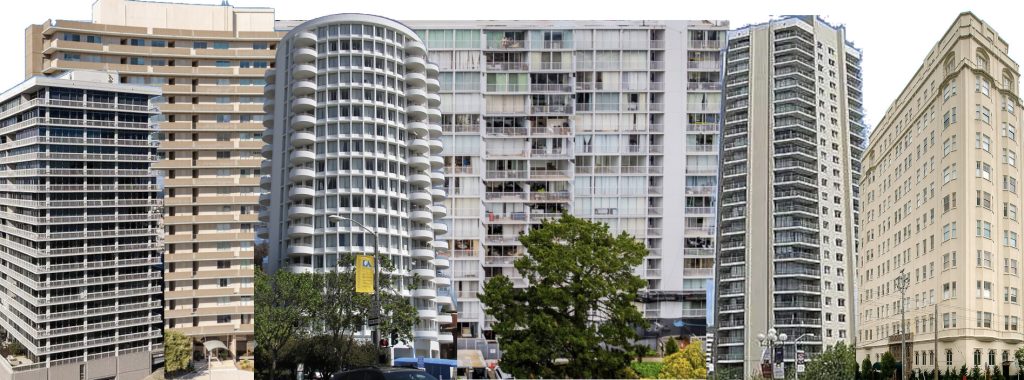
Over 9,800 San Francisco families living in pre-1975 high rise buildings — more than 15,000 people, many of them elderly, infirm, on fixed incomes — are facing drastic financial and life consequences due to an amendment to the city’s Fire Code adopted by the Board of Supervisors in 2022.
This amendment, mandating retrofitting of automatic fire sprinklers in the affected buildings, reportedly was adopted without adequate notice to affected parties and without thoughtful consideration of its effects. Its terrible effects, including costs up to $300,000 per unit plus displacement of residents for construction, are just now becoming apparent.
The Supervisors need to undo the chaos they have caused, and your help is needed now to convince them to do so.
How did we get here?
In 2022, the San Francisco Board of Supervisors passed an ordinance requiring automatic fire sprinklers to be installed in every residential unit of pre-1975 high-rise buildings. The ordinance affects approximately 9,800+ homes in 126 buildings, including in neighborhoods like Western Addition, Nob Hill, Russian Hill, the Marina, and lower Pacific Heights12.
The ordinance applies to residential buildings of 12 stories or more (as well as shorter buildings that lack certain stairways). While the final installation deadline is 2035, condominium homeowners associations must begin planning and levying assessments on residents now, to get building permits required by January 20273 (with proposed extension to 2030).
Current Timeline (after recent changes)
- 2032: Building permits must be obtained (originally: 2027)
- 2032: Water supply must be secured (originally: 2030)
- 2035: Installation must be completed and approved (no proposed change)
History of the Sprinkler Retrofit Ordinance
The ordinance was adopted during a period when San Francisco experienced a spike in residential fires. However, most of these fires did not occur in the high-rise buildings that would be affected by this mandate4. The legislation was sponsored by Supervisors Connie Chan, Rafael Mandelman, Myrna Melgar, and Shamann Walton, and introduced by Aaron Peskin.
According to reports, the Board of Supervisors did not conduct any formal cost studies or consult with any affected residents before passing the ordinance5. Many affected people learned only recently about the mandate and its potential costs, causing widespread concern, confusion and fear.
The Consequences
Financial Impact
The financial burden of compliance on residents of affected buildings threatens to be staggering:
Estimated costs per unit: $200,000 to $300,000+6
- Installation of sprinkler systems in every room
- New tanks, generators, and extensive piping
- Connection to city water supply (potentially blocks away)
- Extensive demolition and reconstruction work
- Architectural and engineering studies
- Permit fees and legal costs
- PLUS – Costs to each family of alternative rental accommodations for an unknown number of months during sprinkler installation
To meet the 2035 deadline, many homeowners associations may need to begin assessing residents an additional $2,500 or more per month immediately. For residents taking out loans, monthly costs could reach $3,000 when including interest7. These new costs will devastate people on fixed incomes and young families.
Displacement and Disruption
The installation work will require:
- Temporary displacement of residents for one or more months during construction
- Relocation costs that residents must bear while continuing to pay their mortgages and HOA fees
- Extended construction periods building-wide, potentially lasting years
For elderly residents, many on fixed incomes, temporary displacement poses significant health and safety risks. Residents like 101-year-old Elaine Hilp, who has lived independently in her Russian Hill apartment for 40 years, may be forced out of their homes8.
Impact on Property Values
The ordinance is already affecting the real estate market:
- Difficulty selling units in affected buildings
- Depressed property values due to pending assessments
- Prospective buyers unwilling to take on the financial uncertainty
- Owners forced to sell at losses to avoid the mandate
Teachers, retirees, and middle-class homeowners who purchased condos as long-term residences now face financial devastation. Many report they cannot afford to double their HOA fees or temporarily relocate while still paying mortgages9.
Where things are now
An eleven member Technical Analysis Council (TAC) has been empaneled to provide recommendations to the Fire Marshall and the Board of Supervisors about how the sprinkler mandate should be applied. It consists of 6 public members – a condominium owner, a renter, a homeowners association board member, a fire protection professional, a contractor, and an architect. Additional seats are occupied by appointed representatives of the SF Fire Department, Controller’s Office, Building Inspection Department, Public Utilities Department, and the Board of Supervisors. The TAC held its first meeting on September 18, 2026. It is expected to deliver a report by mid-December.
The SF Budget and Legislative Analyst’s office was also commissioned by the Board of Supervisors to prepare a fresh report on the feasibility and consequences of the mandate, revisiting its work originally done in 2016 that recommended against imposition of a sprinkler retrofit mandate. The report was released in August.
After a meeting in July to consider public applicants for the Council, five applicants were selected. A sixth seat, the architect, is in the process of being filled.
Previously, in January, 2026, an ordinance was passed extending the mandate’s permit deadline from 2027 to 2032 and water supply deadline from 2030 to 2032
Why “Extensions” and “Exemptions” are not the solution
The current ordinance calls for extending some interim-stage deadlines but not the final deadline.
Neither time extensions nor possible exemptions remove the peril that residents and owners face – they simply add uncertainty and push the peril down the road a few years.
A cloud remains on the salability of and ability to finance affected units and buildings. And ultimate possible exemptions will revolve around technical matters such as accessibility of water sources and ceiling heights in buildings, leading to some residents possibly being spared the consequences of the mandate while others may still be hit with the full force of it.
Repeal is the solution — and other cities and states have seen the light
While resistance to repealing the retrofit mandate is coming from those with an economic interest, such as the Building Trades Council (whose members stand to receive an up to $3 billion payday if the mandate is not repealed), a rigorous cost benefit analysis suggests retaining the mandate does not justify the costs.
San Francisco’s own commission considering fire safety improvements recommended against a retrofit mandate — but its recommendation was ignored.
Retrofitting sprinklers would indisputably increase protections for life and property where done. But good governments balance costs with benefits even in matters of safety. For example, Caltrain’s tracks have many grade level track crossings even where it is obvious that construction of underpasses would improve driver and pedestrian safety.
Other jurisdictions that hastily imposed sprinkler mandates have since thought better of them.
- In 2018, the Maryland State Fire Prevention Commission required all existing residential high‑rise buildings (including condos and co‑ops) without full sprinklers to be retrofitted by January 1, 2033. In January 2024, the Office of the State Fire Marshal determined that “the mandate to retrofit high‑rise residential buildings with sprinkler systems would not be enforced,” so owners of existing high‑rise residential buildings are no longer being compelled to retrofit under that statewide mandate.
- Since 2000, Florida law has required older residential high‑rises (condos/co‑ops, typically 75 feet or higher) to retrofit with either a full automatic sprinkler system or an Engineered Life Safety System (ELSS). The Legislature repeatedly softened this mandate by allowing high‑rise associations to vote to opt out of in‑unit sprinklers (and later, in 2017, to opt out of certain ELSS requirements), significantly weakening the original retrofit obligation for many older multi‑unit high‑rises even though some form of life‑safety system is still required.
- San Diego adopted an ordinance in the late 1980s requiring automatic sprinkler retrofits in all existing high‑rise buildings, with compliance deadlines that were extended multiple times (e.g., from 1996 to 1999, then further extensions for some buildings). A later national review reports that “the city had a sprinkler retrofitting law, but it was taken out of the municipal code … leaving no active across‑the‑board retrofit mandate in force for all existing high‑rise residential towers.
- No other California city has a sprinkler retrofit mandate for older residential high rises. Los Angeles specifically exempts residential buildings from its mandate.
San Francisco Supervisors should reconsider the advice of the city’s own fire safety commission, and the examples of other jurisdictions that have reversed themselves, and bypass the confusion of extensions and exemptions to simply repeal the mandate.
What You Can Do
Suggestions for the 4/6 Rules Committee hearing at City Hall
Attend, and speak when public comment is invited. Two points suggested to include when you speak:
- Revise the proposed council to be a FEASABILITY Advisory Council rather than just a “Technical” advisory council – so that its mission can take in financial and human concerns rather than just technical concerns like “can we pipe enough water to a certain building?”
- Add an additional member to the Council – an economist with expertise in cost-benefit analysis.
Support Our Advocacy
Few, if any affected people can afford a $300,000 per household mandated expense. But if all 15,000 affected folks pitch in $20 or so, that would provide a fund to get our message out encouraging Supervisors to repeal the mandate.
Your support can help fund:
- Community organizing and outreach
- Legal research and analysis of data
- Testimony at Board and commission meetings
- Encouraging press coverage
Please help fund the campaign to repeal this unaffordable mandate.
Contribution form coming soon… Meanwhile, enter your name and email below to be notified when it’s available, or email [email protected].
Request a Property Tax Reassessment
If you own an affected building or a unit in one, the pending sprinkler mandate has likely reduced your property value. You may be eligible for a property tax reduction. In addition to flooding the Assessor’s office with applications, reductions if granted could cost San Francisco as much as $35 million annually in lost property tax revenue.
Click for instructions to request reassessment… (until March 31)
Contact Your Supervisor
Let your District Supervisor know how this ordinance affects you. Personal stories are powerful advocacy tools.
References
- J.K. Dineen, “Sprinkler shock: Owners of S.F. high-rise condos stunned by $300K mandate,” San Francisco Chronicle, November 17, 2025. ↩︎
- Kevin V. Nguyen, “San Francisco wanted to protect condo owners from fires. It might displace them instead,” San Francisco Standard, November 20, 2025. ↩︎
- Ibid.
↩︎ - J.K. Dineen, San Francisco Chronicle, November 17, 2025 ↩︎
- “SF’s Sprinkler Law: What High-Rise Condo Buyers Need To Know,” Inside San Francisco Real Estate, November 24, 2025. ↩︎
- J.K. Dineen, San Francisco Chronicle, November 17, 2025. ↩︎
- Kevin V. Nguyen, San Francisco Standard, November 20, 2025. ↩︎
- Ibid ↩︎
- J.K. Dineen, San Francisco Chronicle, November 17, 2025. ↩︎